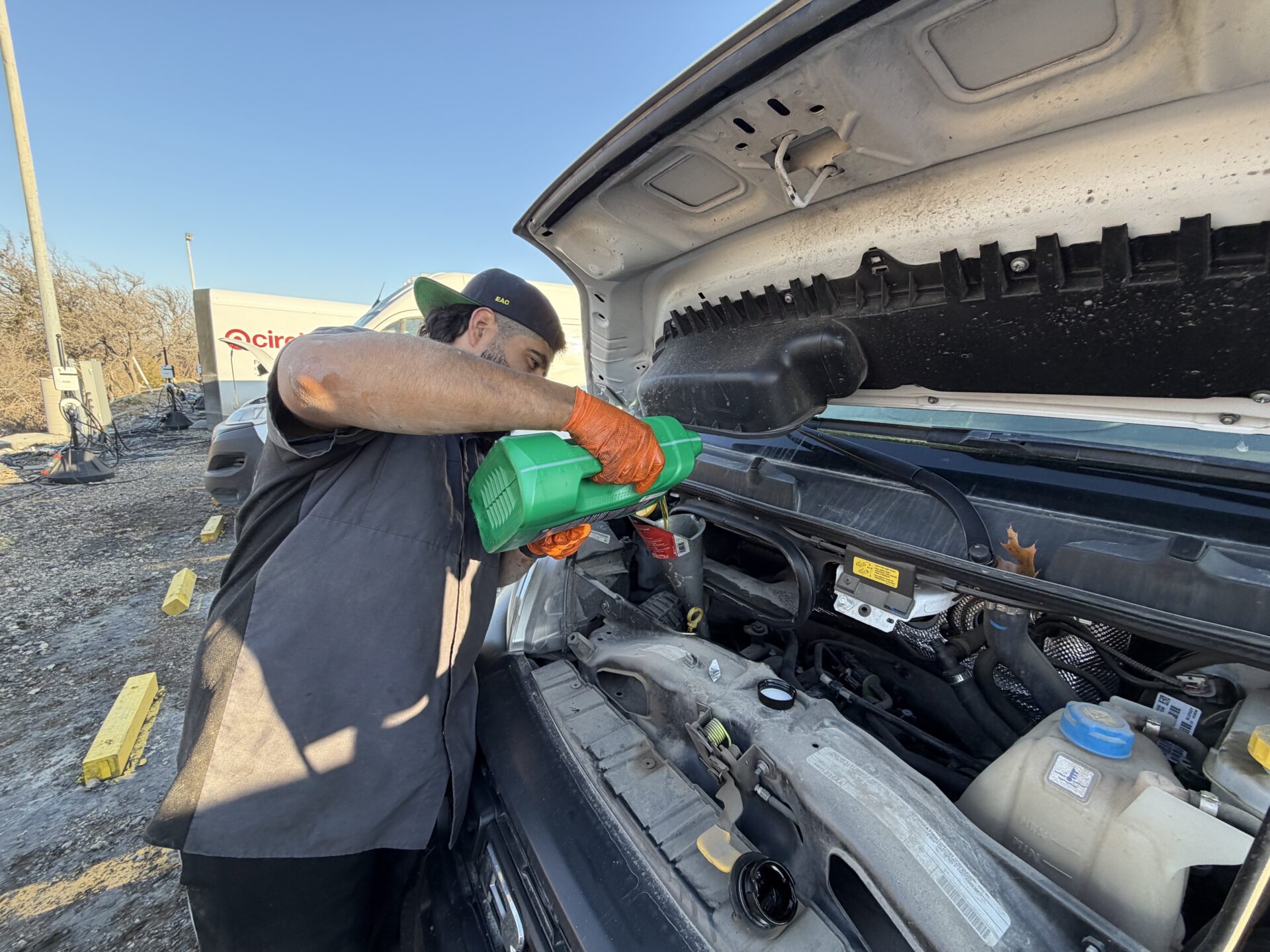
Texas summers are hard on engines. Between stop-and-go traffic and triple-digit heat, the oil in your car works harder here than in most of the country. Here is how to decide when it actually needs changing, without overpaying or waiting too long.
The short answer
For most modern vehicles running full synthetic oil, the interval in your owner’s manual is a good starting point. But if most of your driving matches the manual’s “severe service” conditions, follow that shorter schedule instead.
- Frequent short trips under 10 miles
- Extended idling and stop-and-go traffic
- Towing, hauling, or driving in extreme heat
Why heat changes the math
Oil breaks down faster at high temperatures. As it oxidizes, it thickens, forms deposits, and loses its ability to protect moving parts. That is why the same car can need more frequent changes in Dallas than in a mild climate.
Most of the engine wear we see could have been prevented with oil changes done on schedule.
Lead Technician, Effortless Auto Care
Signs your oil needs changing sooner
- The oil on your dipstick is dark and gritty
- You hear ticking or knocking at startup
- Your oil change reminder comes on earlier than expected
Typical intervals by oil type
| Oil type | Normal driving | Severe driving |
|---|---|---|
| Conventional | 3,000–5,000 mi | 3,000 mi |
| Synthetic blend | 5,000–7,500 mi | Around 5,000 mi |
| Full synthetic | 7,500–10,000 mi | 5,000–7,500 mi |
What about high-mileage oil?
Once a vehicle passes roughly 75,000 miles, high-mileage formulas can help. They contain seal conditioners that reduce small leaks and oil consumption in older engines.
An on-time oil change is the cheapest insurance your engine will ever have.
The bottom line
Don’t wait for the dashboard light. Book a mobile oil change and a certified technician will come to your home or office. No waiting room required.