Author: Muhammad Ahmad

  • Mobile Mechanic vs. Repair Shop: Which Is Right for You?

    Mobile Mechanic vs. Repair Shop: Which Is Right for You?

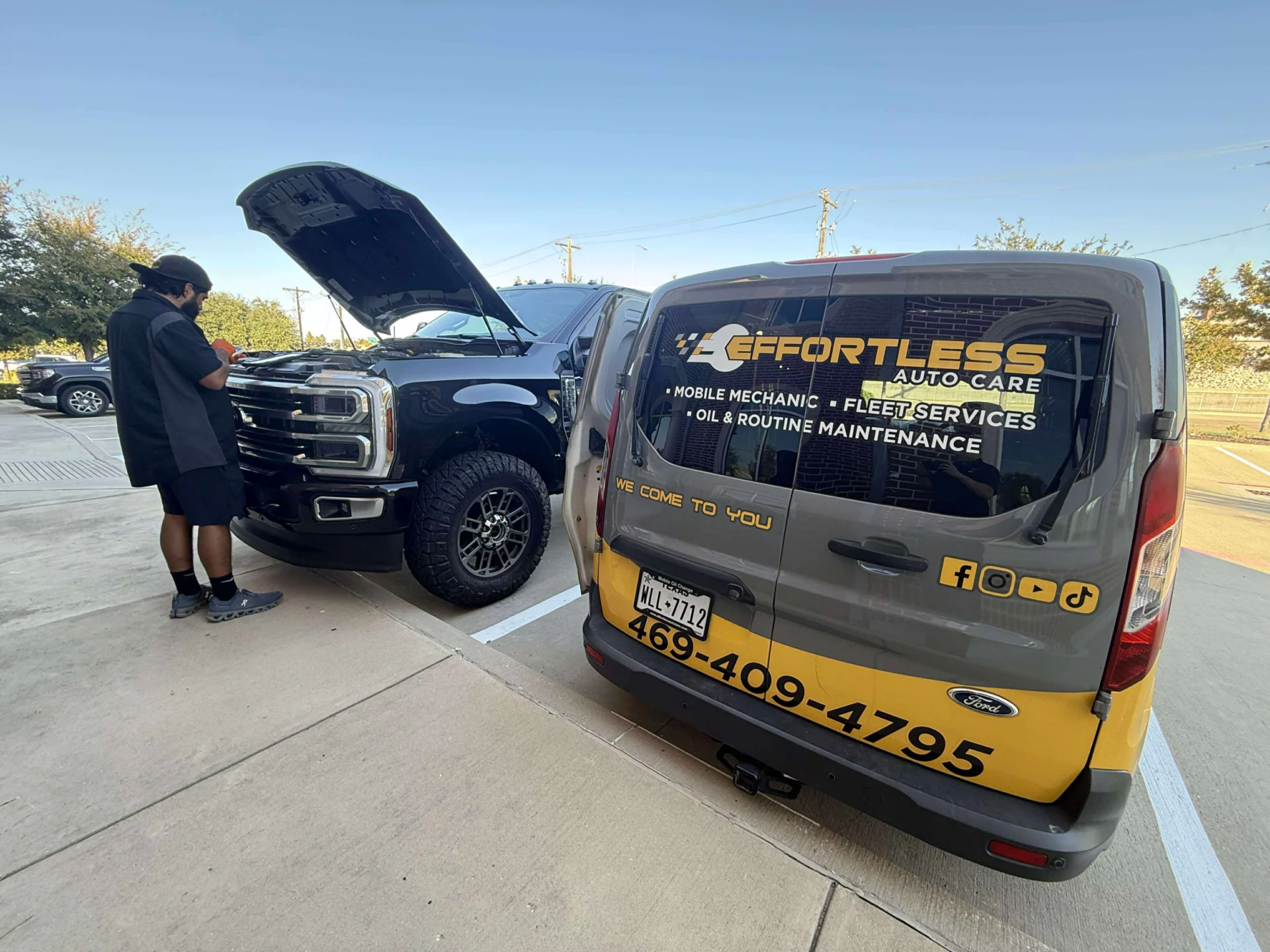
    Mobile mechanics have gone from a niche option to a normal way to get a car serviced. Instead of driving to a shop and waiting, a technician comes to your driveway or office parking lot. But is it the right choice for every job? Here is a straightforward look at when mobile service makes sense and when a shop is still the better call.

    What a mobile mechanic can handle

    A well-equipped service van carries the tools and parts for most routine maintenance and many common repairs:

    • Oil and filter changes, plus fluid top-offs and flushes
    • Brake pad and rotor replacement
    • Battery testing and replacement
    • Check engine light diagnostics
    • Belts, filters, wipers, bulbs and other wear items
    • Scheduled maintenance for fleet vehicles

    Where mobile service wins

    Your time

    There is no drive to the shop, no waiting room and no arranging a ride. The work happens while you are at your desk or at home.

    Transparency

    You can see the work being done and talk to the person doing it. Old parts are right there to look at.

    Fleets and businesses

    Servicing vehicles on site, before or after shifts, keeps them on the road instead of sitting at a shop for a day.

    When a shop is the better choice

    Some jobs need a vehicle lift or heavy equipment: transmission rebuilds, major engine work, exhaust welding and alignments, for example. A good mobile mechanic will tell you up front when a job is outside what can be done safely in a driveway, and point you to the right place.

    How to choose a mobile mechanic

    • Ask what is included in the quote: parts, labor, fluids and disposal.
    • Check that they are insured and that their parts and work come with a warranty.
    • Read recent reviews from customers in your area.
    • Confirm they serve your city and can work at your location, such as an apartment lot or office garage.

    For routine maintenance and most everyday repairs, mobile service saves time without giving up quality. Save the shop visit for the jobs that truly need one.
  • Why Texas Heat Kills Car Batteries (and How to Make Yours Last)

    Why Texas Heat Kills Car Batteries (and How to Make Yours Last)

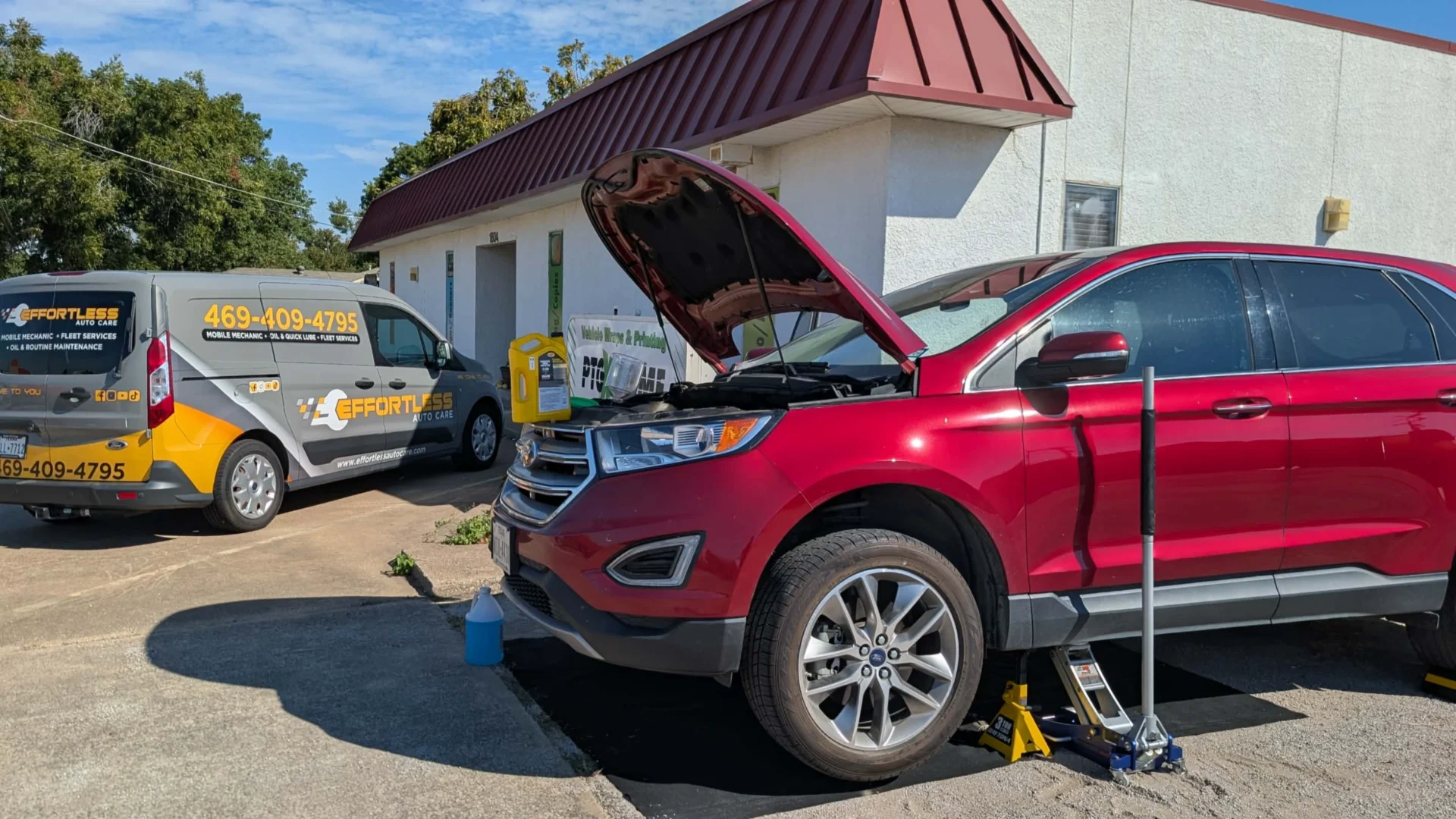
    Most drivers expect batteries to fail in winter, but in North Texas the summer heat does more of the damage. High temperatures speed up the chemical wear inside a battery, and the first cold snap is simply when a weakened battery finally gives up. Here is what to watch for and how to get more life out of yours.

    Why heat shortens battery life

    A car battery is a box of chemical reactions, and heat makes those reactions run faster. That helps in the short term, but it also speeds up corrosion of the internal plates and evaporation of the electrolyte. Under the hood on a 100-degree day, a battery can sit far hotter than the air outside.

    The result is a battery that tests fine in May and leaves you stranded in October.

    Warning signs your battery is failing

    • Slow cranking. The engine turns over sluggishly, especially first thing in the morning.
    • Dim lights at idle. Headlights or dash lights brighten when you rev the engine.
    • Electrical glitches. Power windows, the radio or the start-stop system act up.
    • Corrosion on the terminals. White or blue-green buildup around the posts.
    • A swollen case. Bulging sides are a sign of heat damage. Replace it soon.

    How to make your battery last longer

    Test it before summer ends

    A load test takes a few minutes and shows how much capacity the battery has left. If it is already three years old or more, test it every year at your oil change.

    Keep the terminals clean and tight

    Corrosion and loose clamps add resistance, which makes the starter and charging system work harder. Cleaning them is quick and cheap.

    Park in the shade when you can

    A garage or covered spot lowers under-hood temperatures and slows down the wear.

    Avoid lots of short trips

    Starting the engine uses a lot of power, and a five-minute drive is not enough to put it back. If most of your driving is short hops, a longer drive once a week helps.

    When to replace it

    In hot climates, many batteries last around three to four years. If yours is in that range and showing any of the signs above, replacing it on your schedule beats waiting for a no-start in a parking lot. A mobile mechanic can test and swap the battery at your home or office, so you do not need a jump start to get to a shop.

  • Fleet Maintenance: How to Cut Vehicle Downtime

    Fleet Maintenance: How to Cut Vehicle Downtime

    For a business, a vehicle in the shop is not just a repair bill. It is a missed job, an idle driver, and an unhappy customer. The most reliable way to cut that downtime is a maintenance schedule that fits around your operations instead of interrupting them.

    Why reactive maintenance costs more

    Waiting until something breaks feels cheaper in the moment, but unplanned repairs usually come with towing, rush parts, and vehicles off the road at the worst possible time. Preventive maintenance turns those surprises into short, scheduled stops.

    Building a schedule that works

    Group vehicles by usage, not by age

    A delivery van doing city routes wears differently from a sales car on the highway. Base intervals on mileage and engine hours, not on the calendar alone.

    Service outside working hours

    Mobile service lets routine work happen in your lot before shifts start or after they end, so vehicles never leave the rotation.

    Track everything in one place

    Service history, upcoming intervals, and inspection notes should live in one shared record. That way nothing depends on one person’s memory.

    TaskSuggested cadenceWhy it matters
    Oil and filterPer manufacturer severe scheduleEngine life
    Tire rotation and pressureEvery oil changeFuel economy and tire life
    Brake inspectionEvery other serviceDriver safety
    Fluids and beltsEvery servicePrevents roadside failures

    The best fleet repair is the one that happens on your schedule, not the vehicle’s.

    Effortless Auto Care Fleet Team

    Getting started

    Start with a baseline inspection of every vehicle, set intervals by usage group, and book recurring service windows. Most fleets see fewer surprise breakdowns within the first few months.

  • Check Engine Light On? What It Means and What to Do Next

    Check Engine Light On? What It Means and What to Do Next

    Few things cause more anxiety than a glowing check engine light. The good news: it does not always mean something serious. The light is your car’s way of saying its computer noticed something outside normal range, and it stored a code that explains what.

    Solid vs. flashing: know the difference

    Solid light

    Something needs attention soon, but it is usually safe to keep driving carefully until you can get it checked.

    Flashing light

    Often a severe misfire that can damage the catalytic converter. Reduce speed and get it inspected as soon as possible.

    The most common causes

    • A loose gas cap. It is the easiest fix, so check it first.
    • Oxygen sensor. It affects fuel economy and emissions.
    • Spark plugs or ignition coils. These often cause misfires.
    • Catalytic converter. This is usually a symptom of another problem left unfixed.
    • Evaporative emissions (EVAP) leak. Small leaks are common and are often harmless at first.

    Reading the code

    Every car built since 1996 has an OBD-II port, usually under the dashboard. A scanner reads codes like P0300 (random misfire) or P0455 (large EVAP leak).

    A code tells you where to look, not what to replace. Diagnosis is what saves you money.

    Why parts-swapping gets expensive

    Replacing whatever part the code names, without testing, is how a small repair becomes a large bill. Proper diagnostics confirm the root cause before any money is spent.

    What to do next

    1. Check that the gas cap is tight and clicks into place
    2. Note any changes in how the car drives, sounds, or smells
    3. Book a diagnostic visit so a technician can read and test the code
  • 7 Brake Warning Signs You Should Never Ignore

    7 Brake Warning Signs You Should Never Ignore

    Your brakes rarely fail without warning. Most problems announce themselves weeks in advance through sounds, vibrations, or a change in how the pedal feels. Knowing what to listen for can save you from a far more expensive repair.

    1. Squealing or squeaking

    Many brake pads include a small metal wear indicator that squeals when the pad material gets thin. If the noise is consistent when you brake, it is time for an inspection.

    2. Grinding

    Grinding usually means the pad is worn through and metal is contacting the rotor. Stop driving as soon as it is safe and have the brakes checked. Continuing can damage the rotors and turn a pad replacement into a much larger job.

    3. A soft or spongy pedal

    If the pedal sinks further than usual, there may be air or moisture in the brake fluid, or a leak in the system. This one is a safety issue, not a maintenance item.

    4. Vibration when braking

    A pulsing pedal or a shaking steering wheel under braking often points to uneven rotor wear.

    5. The car pulls to one side

    Pulling under braking can mean a stuck caliper or uneven pad wear. It can also be a tire or alignment issue, which is why a proper inspection matters.

    6. A burning smell

    A sharp, chemical smell after repeated hard braking can mean overheated brakes. If it appears during normal driving, a caliper may be dragging.

    7. The brake warning light

    It can be as simple as the parking brake being engaged, or as serious as low brake fluid. Never ignore it.


    Common questions

    How long do brake pads last?

    It varies widely with driving style and vehicle. City driving with frequent stops wears pads much faster than highway miles.

    Do I always need new rotors with new pads?

    Not always. Rotors are measured during an inspection, and they only need replacing if they are worn below spec or damaged.

    Noticing any of these signs? Our technicians can inspect your brakes in your driveway and give you a clear quote before any work starts.

  • How Often Should You Change Your Oil in Texas Heat?

    How Often Should You Change Your Oil in Texas Heat?

    Texas summers are hard on engines. Between stop-and-go traffic and triple-digit heat, the oil in your car works harder here than in most of the country. Here is how to decide when it actually needs changing, without overpaying or waiting too long.

    The short answer

    For most modern vehicles running full synthetic oil, the interval in your owner’s manual is a good starting point. But if most of your driving matches the manual’s “severe service” conditions, follow that shorter schedule instead.

    • Frequent short trips under 10 miles
    • Extended idling and stop-and-go traffic
    • Towing, hauling, or driving in extreme heat

    Why heat changes the math

    Oil breaks down faster at high temperatures. As it oxidizes, it thickens, forms deposits, and loses its ability to protect moving parts. That is why the same car can need more frequent changes in Dallas than in a mild climate.

    Most of the engine wear we see could have been prevented with oil changes done on schedule.

    Lead Technician, Effortless Auto Care

    Signs your oil needs changing sooner

    1. The oil on your dipstick is dark and gritty
    2. You hear ticking or knocking at startup
    3. Your oil change reminder comes on earlier than expected

    Typical intervals by oil type

    Oil typeNormal drivingSevere driving
    Conventional3,000–5,000 mi3,000 mi
    Synthetic blend5,000–7,500 miAround 5,000 mi
    Full synthetic7,500–10,000 mi5,000–7,500 mi
    General ranges only. Always check your owner’s manual first.

    What about high-mileage oil?

    Once a vehicle passes roughly 75,000 miles, high-mileage formulas can help. They contain seal conditioners that reduce small leaks and oil consumption in older engines.

    An on-time oil change is the cheapest insurance your engine will ever have.

    The bottom line

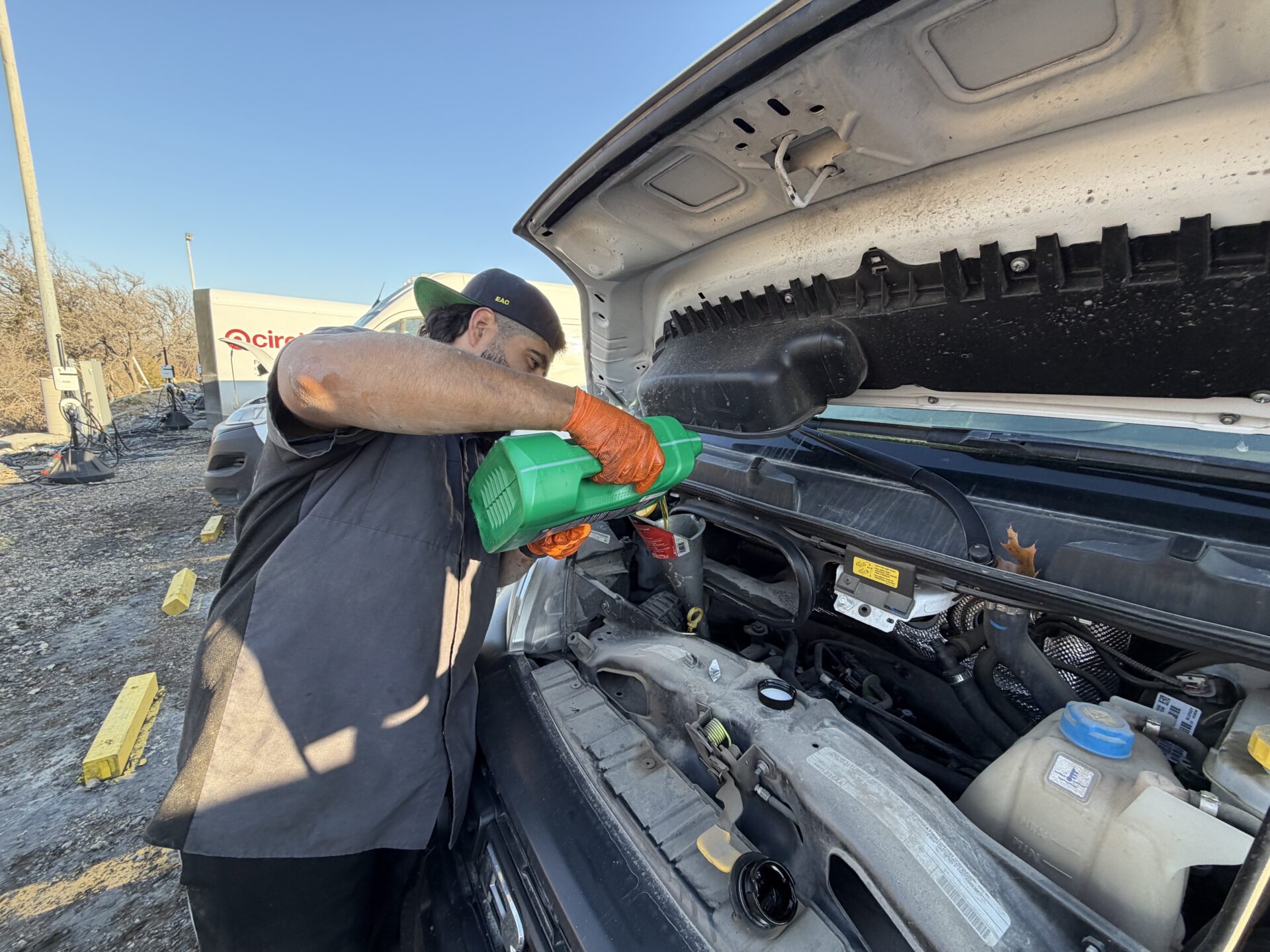
    Don’t wait for the dashboard light. Book a mobile oil change and a certified technician will come to your home or office. No waiting room required.