For a business, a vehicle in the shop is not just a repair bill. It is a missed job, an idle driver, and an unhappy customer. The most reliable way to cut that downtime is a maintenance schedule that fits around your operations instead of interrupting them.
Why reactive maintenance costs more
Waiting until something breaks feels cheaper in the moment, but unplanned repairs usually come with towing, rush parts, and vehicles off the road at the worst possible time. Preventive maintenance turns those surprises into short, scheduled stops.
Building a schedule that works
Group vehicles by usage, not by age
A delivery van doing city routes wears differently from a sales car on the highway. Base intervals on mileage and engine hours, not on the calendar alone.
Service outside working hours
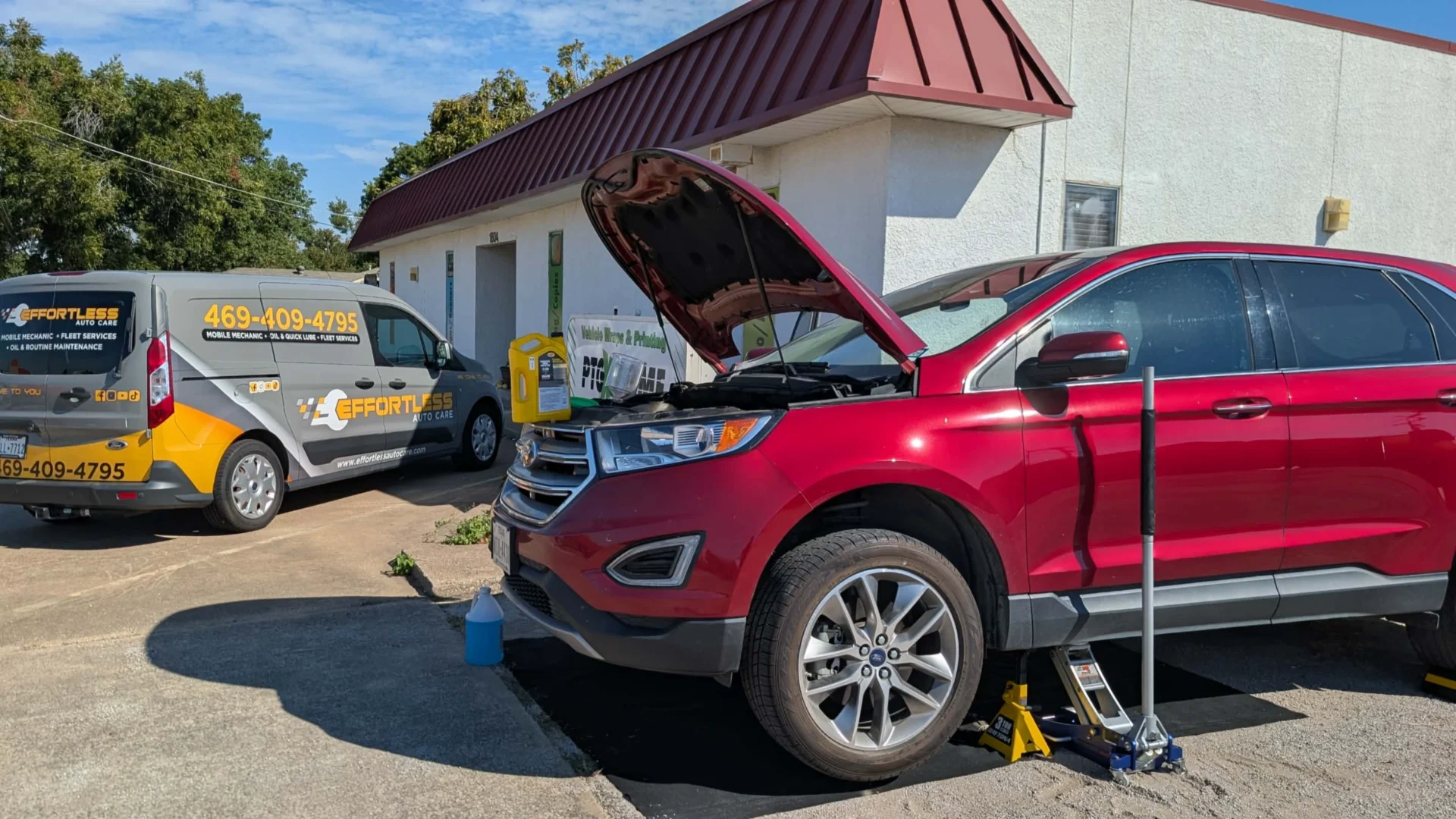
Mobile service lets routine work happen in your lot before shifts start or after they end, so vehicles never leave the rotation.
Track everything in one place
Service history, upcoming intervals, and inspection notes should live in one shared record. That way nothing depends on one person’s memory.
| Task | Suggested cadence | Why it matters |
|---|---|---|
| Oil and filter | Per manufacturer severe schedule | Engine life |
| Tire rotation and pressure | Every oil change | Fuel economy and tire life |
| Brake inspection | Every other service | Driver safety |
| Fluids and belts | Every service | Prevents roadside failures |
The best fleet repair is the one that happens on your schedule, not the vehicle’s.
Effortless Auto Care Fleet Team
Getting started
Start with a baseline inspection of every vehicle, set intervals by usage group, and book recurring service windows. Most fleets see fewer surprise breakdowns within the first few months.