Tag: Brakes

  • Mobile Mechanic vs. Repair Shop: Which Is Right for You?

    Mobile Mechanic vs. Repair Shop: Which Is Right for You?

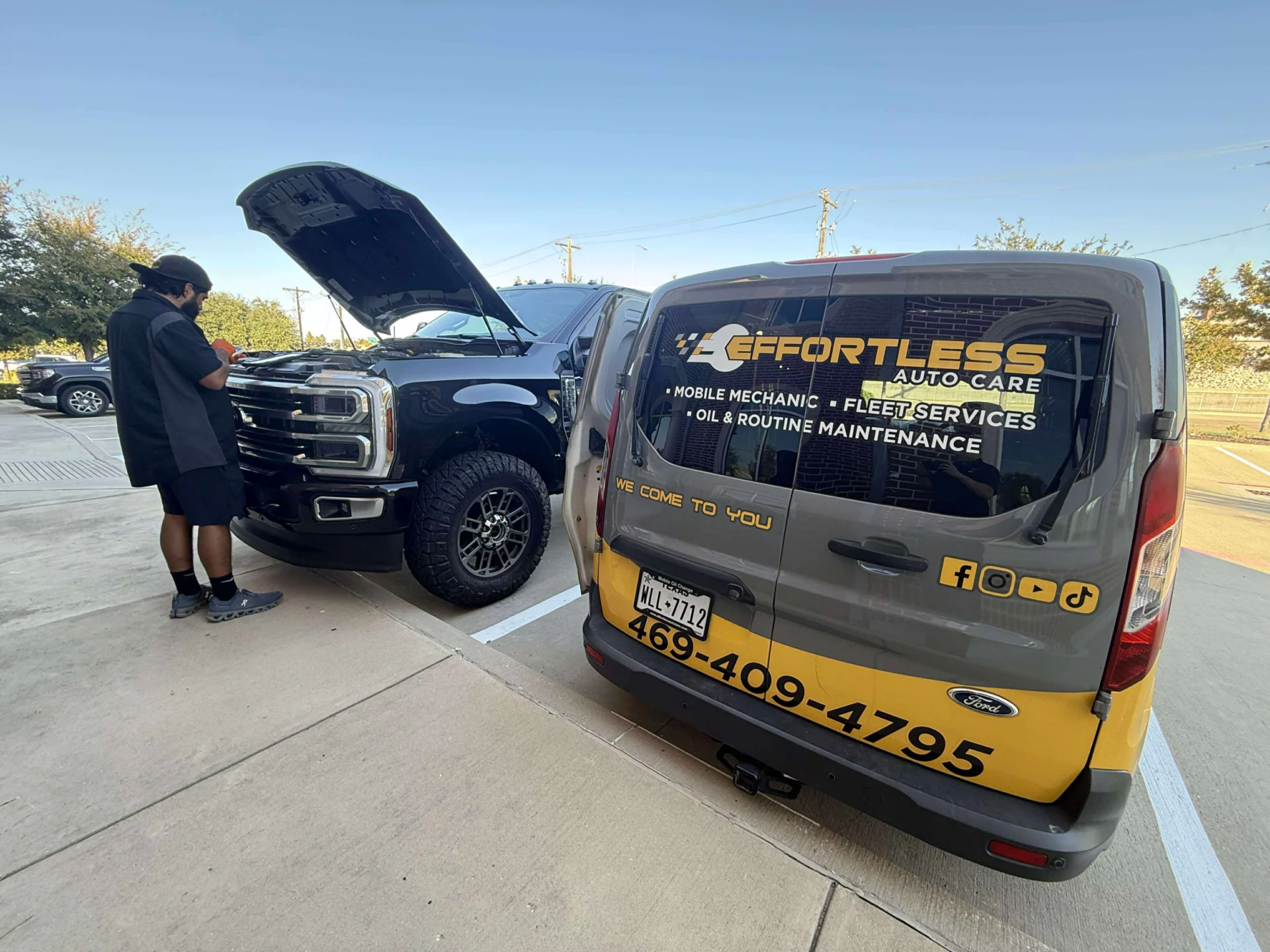
    Mobile mechanics have gone from a niche option to a normal way to get a car serviced. Instead of driving to a shop and waiting, a technician comes to your driveway or office parking lot. But is it the right choice for every job? Here is a straightforward look at when mobile service makes sense and when a shop is still the better call.

    What a mobile mechanic can handle

    A well-equipped service van carries the tools and parts for most routine maintenance and many common repairs:

    • Oil and filter changes, plus fluid top-offs and flushes
    • Brake pad and rotor replacement
    • Battery testing and replacement
    • Check engine light diagnostics
    • Belts, filters, wipers, bulbs and other wear items
    • Scheduled maintenance for fleet vehicles

    Where mobile service wins

    Your time

    There is no drive to the shop, no waiting room and no arranging a ride. The work happens while you are at your desk or at home.

    Transparency

    You can see the work being done and talk to the person doing it. Old parts are right there to look at.

    Fleets and businesses

    Servicing vehicles on site, before or after shifts, keeps them on the road instead of sitting at a shop for a day.

    When a shop is the better choice

    Some jobs need a vehicle lift or heavy equipment: transmission rebuilds, major engine work, exhaust welding and alignments, for example. A good mobile mechanic will tell you up front when a job is outside what can be done safely in a driveway, and point you to the right place.

    How to choose a mobile mechanic

    • Ask what is included in the quote: parts, labor, fluids and disposal.
    • Check that they are insured and that their parts and work come with a warranty.
    • Read recent reviews from customers in your area.
    • Confirm they serve your city and can work at your location, such as an apartment lot or office garage.

    For routine maintenance and most everyday repairs, mobile service saves time without giving up quality. Save the shop visit for the jobs that truly need one.

  • 7 Brake Warning Signs You Should Never Ignore

    7 Brake Warning Signs You Should Never Ignore

    Your brakes rarely fail without warning. Most problems announce themselves weeks in advance through sounds, vibrations, or a change in how the pedal feels. Knowing what to listen for can save you from a far more expensive repair.

    1. Squealing or squeaking

    Many brake pads include a small metal wear indicator that squeals when the pad material gets thin. If the noise is consistent when you brake, it is time for an inspection.

    2. Grinding

    Grinding usually means the pad is worn through and metal is contacting the rotor. Stop driving as soon as it is safe and have the brakes checked. Continuing can damage the rotors and turn a pad replacement into a much larger job.

    3. A soft or spongy pedal

    If the pedal sinks further than usual, there may be air or moisture in the brake fluid, or a leak in the system. This one is a safety issue, not a maintenance item.

    4. Vibration when braking

    A pulsing pedal or a shaking steering wheel under braking often points to uneven rotor wear.

    5. The car pulls to one side

    Pulling under braking can mean a stuck caliper or uneven pad wear. It can also be a tire or alignment issue, which is why a proper inspection matters.

    6. A burning smell

    A sharp, chemical smell after repeated hard braking can mean overheated brakes. If it appears during normal driving, a caliper may be dragging.

    7. The brake warning light

    It can be as simple as the parking brake being engaged, or as serious as low brake fluid. Never ignore it.


    Common questions

    How long do brake pads last?

    It varies widely with driving style and vehicle. City driving with frequent stops wears pads much faster than highway miles.

    Do I always need new rotors with new pads?

    Not always. Rotors are measured during an inspection, and they only need replacing if they are worn below spec or damaged.

    Noticing any of these signs? Our technicians can inspect your brakes in your driveway and give you a clear quote before any work starts.